The Growing Success of Gift Trees
The Growing Success of Gift Trees
Every gift tells a story, but most stories end the moment the wrapping paper hits the bin. A bouquet fades within a week, a greeting card gets recycled, a gadget is forgotten in a drawer. A gift tree is different. Planted once, it keeps growing for decades – and with it, the memory of the person who gave it. This simple idea has quietly become one of the most meaningful trends in modern gifting, and it is worth understanding why.
What is a gift tree?
A gift tree is exactly what it sounds like: a young tree, given as a present to mark an important moment in someone's life. Unlike cut flowers or potted houseplants, a gift tree is meant to be planted in the ground, where it can grow for years or even generations. Depending on the species, it may bear fruit, provide shade, flower every spring, or simply stand as a living landmark in a garden.
What sets a gift tree apart from almost any other present is its relationship with time. Most gifts are valued at the moment they are received and lose value afterwards. A gift tree works the other way around: its real value only becomes visible years later, when it has grown tall enough to climb, strong enough to provide shade, or old enough to be pointed out to grandchildren as "the tree we got when you were born."
Why gift trees have grown in popularity
The rise of the gift tree is closely tied to two broader shifts in how people think about presents. The first is a growing appetite for experiences and meaning over material possessions. Surveys consistently show that givers and recipients alike increasingly value gifts that are personal, memorable, or tied to a story – exactly the qualities a living tree offers.
The second shift is environmental awareness. A gift tree is, quite literally, a present that gives back: it absorbs CO₂, supports local biodiversity, and often provides shade or fruit for decades. For many people, choosing a gift tree over a disposable item feels like a small but genuine act of responsibility – without sacrificing the emotional impact of giving something special.
Together, these two trends have turned gift trees from a niche idea into a recognised gifting category, particularly in the United States, where specialist retailers now ship saplings nationwide for occasions ranging from birthdays to memorials.
A symbol for every occasion
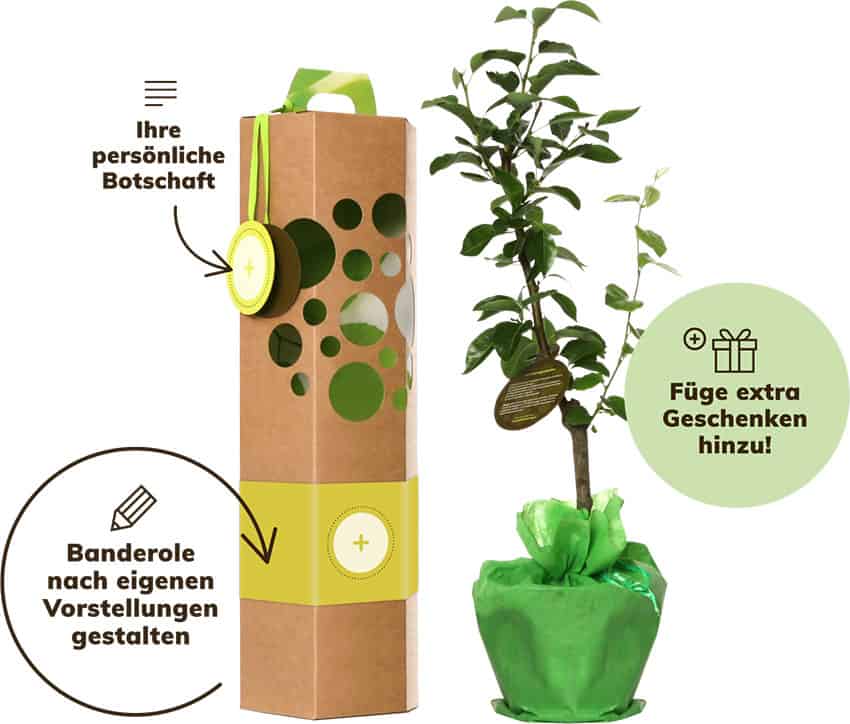 A young tree in individual gift packaging – a present that keeps growing long after the occasion.
One of the reasons gift trees resonate so widely is that different species carry different meanings, allowing a giver to match the symbolism of the tree to the occasion.
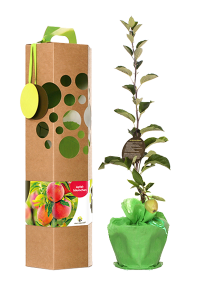 Apple tree: a classic symbol of a fruitful, lasting bond – popular for weddings and anniversaries.
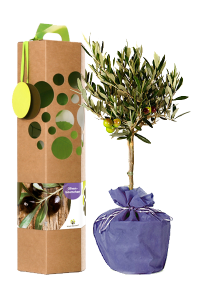 Olive tree: long associated with peace and longevity – a meaningful gift to mark gratitude or remembrance.
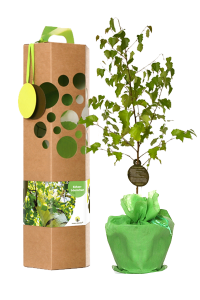 Birch tree: known for its association with new beginnings – a fitting choice for a birth or a fresh start.
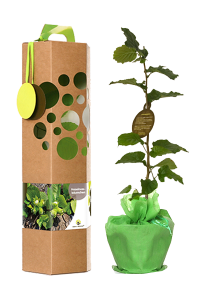 Hazel tree: traditionally linked to wisdom and inspiration – an unusual but thoughtful gift for a graduation or milestone.
This is, in many ways, the same logic that has long guided the language of flowers – except that a tree's symbolism does not wilt after a week. It grows alongside the relationship it represents.
The most meaningful occasions for a gift tree
Births and christenings: Perhaps the most emotionally resonant use of a gift tree. A tree planted at the birth of a child grows up alongside them – by the time the child is old enough to climb it, the tree has become part of the family's story.
Weddings: Many couples now ask guests for a tree instead of, or alongside, traditional gifts. Two lives growing together, represented by something that literally grows.
Memorials: A gift tree offers a living alternative to cut flowers at a funeral – a place that family and friends can visit and watch grow for years, rather than a bouquet that fades within days.
Anniversaries and retirements: Milestones that mark years of commitment are well matched by a gift that itself represents the passage of time.
Corporate and business gifts: A growing number of companies now choose gift trees for clients, partners, and employees – a present that quietly reflects values such as sustainability, long-term thinking, and genuine appreciation.
From the United States to Europe: a quiet pioneer
While gift trees have a long and well-established history as a gifting category in the United States, the idea has taken considerably longer to reach Europe – and Germany in particular, where flowers and chocolates have traditionally dominated the gifting culture.
Baumgeschenk.de, founded in 2009 by Mirella and Marcus Wind, was among the first companies to bring the gift tree concept to the German-speaking market. What began as a small idea – offering young trees as gifts for births, weddings, and other meaningful occasions – has grown into a dedicated online shop serving customers across Germany, Austria, and Switzerland, with a wide selection of tree species matched to different occasions.
Over the years, the company has also developed a corporate gifting service, helping businesses replace conventional promotional items with something that reflects sustainability and lasting value – a trend that mirrors the same shift seen among individual gift-givers.
Choosing and caring for a gift tree
Not every tree suits every garden, which is why species selection matters. Smaller gardens often benefit from fruit trees or ornamental species that stay manageable in size, while larger properties can accommodate trees that grow tall and broad over decades. Climate, soil type, and the amount of sunlight available all play a role in choosing a species that will genuinely thrive.
Most reputable gift tree suppliers, including Baumgeschenk.de, provide young trees along with planting instructions, so that recipients without gardening experience can give their tree the best possible start. A well-chosen, well-planted gift tree requires surprisingly little ongoing care – watering during the first year or two is often all that is needed before the tree becomes self-sufficient.
Frequently asked questions about gift trees
What is a gift tree?
A gift tree is a young tree given as a present to mark a special occasion, such as a birth, wedding, anniversary, or memorial. Unlike cut flowers, it is planted and continues to grow for years or decades, becoming a lasting symbol of the occasion it represents.
What occasions are gift trees suitable for?
Gift trees are commonly given for births and christenings, weddings, anniversaries, retirements, and memorials, as well as corporate gifts for clients, partners, and employees who appreciate sustainable, long-term gestures.
Do gift trees need special care?
Most gift trees need regular watering during their first one to two years while their root systems establish. After that, a well-chosen species suited to the local climate and garden size typically requires only minimal maintenance.
A gift that keeps growing
The appeal of a gift tree lies in a simple shift of perspective: instead of giving something that is enjoyed once and then discarded, the giver hands over something that will still be growing – and still telling its story – long after the occasion itself has been forgotten. It is this combination of symbolism, sustainability, and sheer longevity that has carried the gift tree from a niche idea to a genuinely meaningful gifting tradition, now slowly taking root in Europe as well.
To explore the range of trees available for life's most important moments, visit Baumgeschenk.de.


